
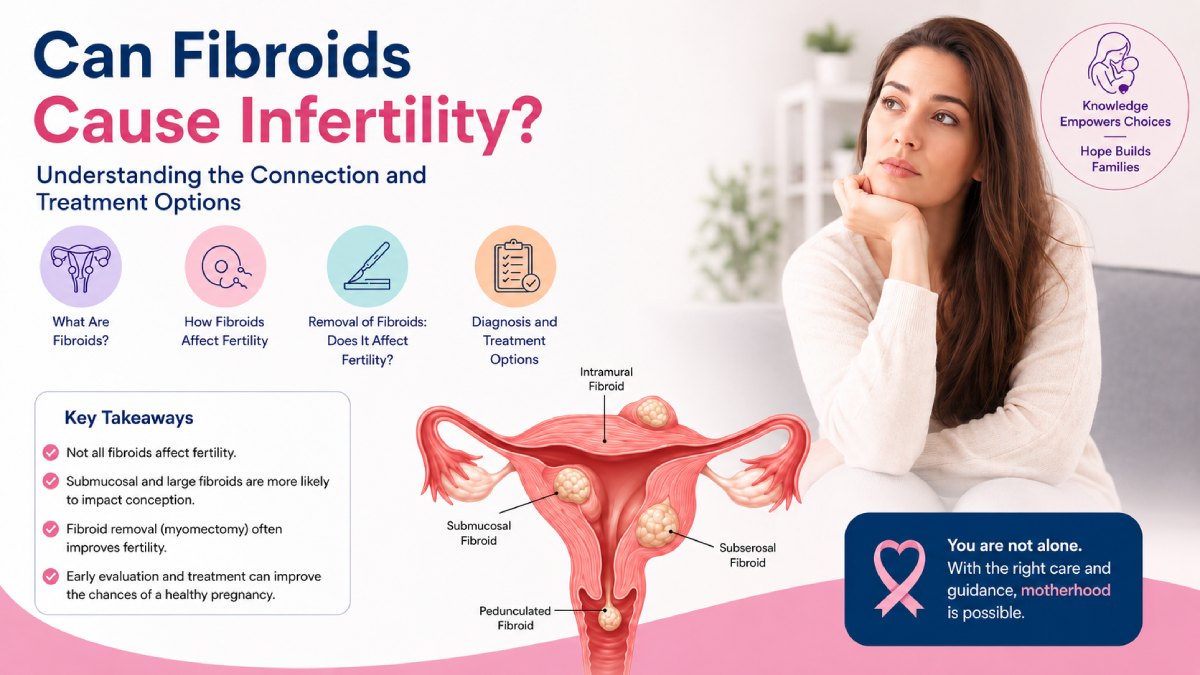
For many women trying to conceive, discovering they have uterine fibroids can raise several concerns. One of the most common questions patients ask is: can fibroids cause infertility? The answer is not always straightforward. While many women with fibroids become pregnant naturally, certain types of fibroids can affect fertility and make conception more challenging.
Understanding the relationship between fibroids and infertility is essential for making informed decisions about your reproductive health. In this article, we’ll explore how fibroids may impact fertility, whether treatment is necessary, and address a common concern: can removal of fibroids cause infertility?
What Are Uterine Fibroids?
Uterine fibroids are non-cancerous growths that develop within or around the uterus. They can vary significantly in size, number, and location. Fibroids are extremely common among women of reproductive age and often do not cause symptoms.
The main types of fibroids include
- Submucosal fibroids – Grow inside the uterine cavity
- Intramural fibroids – Develop within the muscular wall of the uterus
- Subserosal fibroids – Grow on the outer surface of the uterus
- Pedunculated fibroids – Attached to the uterus by a stalk-like structure
The impact of fibroids on fertility largely depends on their size and location.
Can Fibroids Cause Infertility?
The short answer is yes, in some cases, fibroids can cause infertility. However, not all fibroids interfere with conception.
Research suggests that fibroids are associated with infertility in a small percentage of women, particularly when they alter the shape of the uterine cavity or interfere with embryo implantation.
How Fibroids May Affect Fertility
1. Distortion of the Uterine Cavity
Submucosal fibroids can change the shape of the uterus, making it more difficult for a fertilized embryo to implant successfully.
When implantation is affected, the chances of pregnancy may decrease.
2. Blockage of the Fallopian Tubes
Large fibroids located near the fallopian tubes can partially or completely block the pathway through which the egg and sperm meet.
This can reduce the likelihood of natural conception.
3. Changes in Blood Flow
Fibroids may alter blood flow to the uterine lining, creating a less favorable environment for embryo implantation and growth.
4. Inflammation Within the Uterus
Some fibroids may trigger local inflammation, which can negatively impact fertility and increase the risk of pregnancy loss.
5. Increased Risk of Miscarriage
Certain fibroids, especially those inside the uterine cavity, may increase the risk of early pregnancy loss by interfering with normal fetal development.
Which Fibroids Are Most Likely to Affect Fertility?
Not all fibroids have the same effect on reproductive outcomes.
-
Submucosal Fibroids
These are considered the most significant fibroids when it comes to infertility because they directly affect the uterine cavity.
Women with submucosal fibroids often experience improved fertility after treatment. -
Large Intramural Fibroids
Intramural fibroids can impact fertility if they become large enough to distort the uterine cavity or interfere with implantation.
-
Subserosal Fibroids
Fibroids located on the outside of the uterus generally have little to no effect on fertility unless they become extremely large.
Signs That Fibroids May Be Affecting Fertility
You should consider evaluation if you have fibroids and experience
- Difficulty conceiving after 12 months of regular unprotected intercourse
- Recurrent miscarriages
- Heavy menstrual bleeding
- Pelvic pain or pressure
- Irregular menstrual cycles
- History of multiple failed fertility treatments
A comprehensive fertility assessment can help determine whether fibroids are contributing to conception difficulties.
Can Removal of Fibroids Cause Infertility?
Many women worry about surgery and often ask, can removal of fibroids cause infertility?
In most cases, fibroid removal is performed to improve fertility rather than reduce it. The procedure commonly used is called a myomectomy, which removes fibroids while preserving the uterus.
When Fibroid Removal Can Improve Fertility
Removing fibroids may increase pregnancy rates when
- Fibroids distort the uterine cavity
- Large fibroids interfere with implantation
- Fibroids block the fallopian tubes
- Recurrent miscarriages are linked to fibroids
For many women, myomectomy can improve the chances of natural conception and successful pregnancy.
Are There Any Risks?
Like any surgery, fibroid removal carries some risks.
Potential complications include
- Scar tissue formation inside the uterus
- Adhesions around reproductive organs
- Infection
- Rare surgical complications affecting the uterus
However, when performed by an experienced gynecologist, these risks are generally low, and fertility outcomes are often favorable.
Therefore, the answer to can removal of fibroids cause infertility is usually no. In fact, fibroid removal is frequently recommended when fibroids are clearly affecting reproductive function.
How Are Fibroids Diagnosed During an Infertility Evaluation?
If infertility is suspected, your doctor may recommend
-
Pelvic Ultrasound
A commonly used imaging test that helps identify fibroids and assess their size and location.
-
Saline Infusion Sonography
This test provides a clearer view of the uterine cavity and can identify fibroids that may affect implantation.
-
MRI Scan
MRI imaging offers detailed information about fibroid size, number, and location, particularly before surgery.
-
Hysteroscopy
A minimally invasive procedure that allows direct visualization of the uterine cavity.
Treatment Options for Women Trying to Conceive
The best treatment depends on several factors, including
- Age
- Fertility goals
- Fibroid size and location
- Severity of symptoms
- Previous pregnancy history
Common treatment options include
-
Monitoring
Small fibroids that do not affect the uterine cavity may simply be monitored.
-
Medical Management
Medications can help manage symptoms but are generally not long-term fertility solutions.
-
Myomectomy
Myomectomy remains the preferred fertility-preserving treatment for women whose fibroids are affecting conception or pregnancy outcomes.
-
Assisted Reproductive Techniques
In some cases, fertility treatments such as IVF may be recommended alongside fibroid management.
When Should You Consult a Fertility Specialist?
If you have been trying to conceive without success and have been diagnosed with fibroids, professional evaluation is important.
Women over 35 should seek evaluation after six months of trying to conceive, while younger women should consider assessment after one year of unsuccessful attempts.
Consulting an experienced Infertility specialist in Goa can help identify whether fibroids are contributing to fertility challenges and determine the most effective treatment plan for achieving pregnancy.
Final Thoughts
Many women wonder, can fibroids cause infertility? While not all fibroids affect fertility, certain types—particularly those that distort the uterine cavity—can interfere with conception, implantation, and pregnancy outcomes.
A related concern is can removal of fibroids cause infertility. In most situations, the goal of fibroid removal is to improve fertility, and many women experience better reproductive outcomes after appropriate treatment.
If you have fibroids and are struggling to conceive, early evaluation can help identify the underlying cause and provide personalized treatment options. With proper diagnosis and management, many women with fibroids go on to achieve healthy pregnancies and successful parenthood.
