
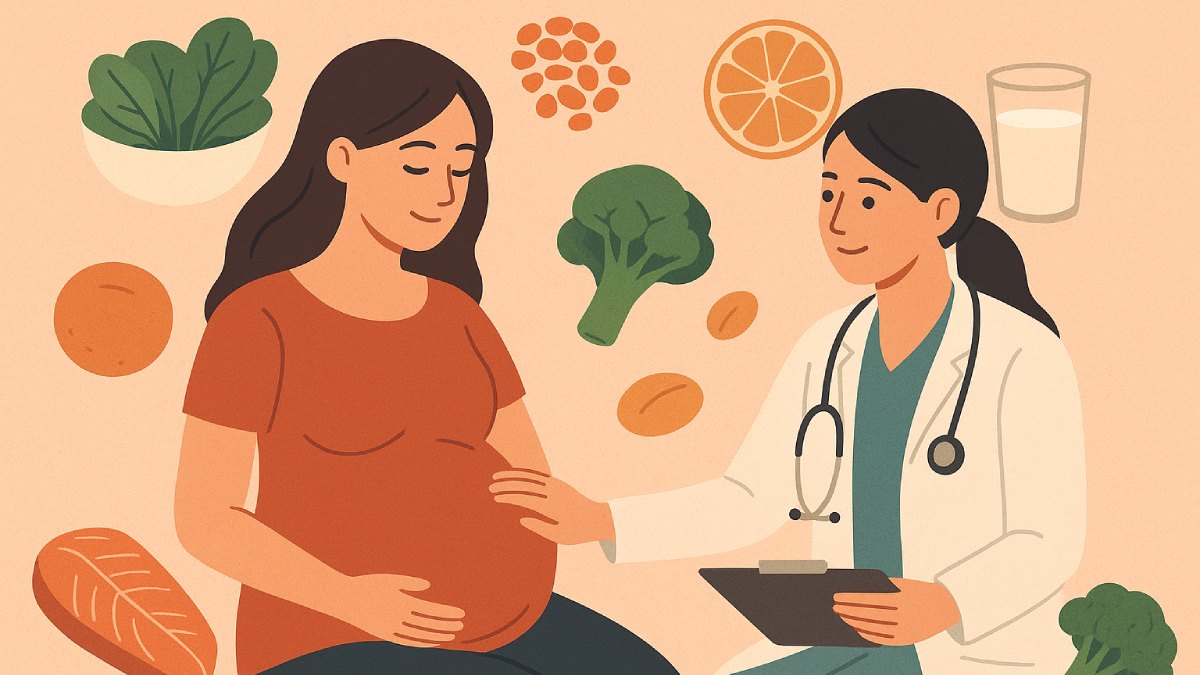
From your friendly neighbourhood women’s health specialist — and proudly one of the best gynecologists in Goa
Pregnancy is such a special time. I see it every day in my clinic—the excitement, the nervous smiles, the questions, the protective hand that instantly rests on the belly. It’s a beautiful experience, but it also comes with a lot of changes, a lot of advice, and sometimes… a lot of confusion.
One of the first things most expecting mothers ask me is: “Doctor, what should I eat now that I’m pregnant?”
And honestly, it’s a great question. Because during pregnancy, your body isn’t just “eating for two”—it’s building a tiny human from scratch. That requires the right balance of nutrients, love, rest, and care.
In this blog, I want to gently walk you through the most important nutrients in pregnancy, why they matter, and how you can make simple, sustainable changes to your diet. No complicated science, no pressure—just real guidance from someone who genuinely wants you to have the healthiest, happiest pregnancy possible.
Why Pregnancy Nutrition Matters (More Than Most People Realize)
Your body is doing incredible work. Your blood volume increases, your hormones support new life, and your baby’s organs, brain, and bones are forming at lightning speed. That’s why pregnant women and nutrition are deeply linked—you really are fueling a miracle.
Good nutrition helps
- Reduce fatigue
- Support your baby’s brain and body development
- Maintain your immunity
- Lower the risk of complications
- Keep your bones strong
- Improve energy and mood
Think of it as giving your baby the best start even before they take their first breath.
1. Folic Acid: Your Baby’s First Shield of Protection
I often tell my patients: folic acid is non-negotiable.
Most women don’t realize that their baby’s neural tube (which becomes the brain and spinal cord) forms in the earliest weeks—sometimes before they even miss a period. That’s why folic acid is crucial even when you’re planning a pregnancy.
What it does
- Helps prevent neural tube defects
- Supports healthy brain and spinal development
How to get it
- Supplements (400–600 mcg)
- Spinach, dals, beans, oranges, fortified cereal
It’s perfectly okay if you can’t get it all from food. Most women take a supplement, and that’s normal.
2. Iron: Your Body’s Energy Partner
One of the most common issues I see in pregnant women—especially in India—is iron deficiency anemia. It can make you feel exhausted, dizzy, or breathless.
Remember, your body is making extra blood to nourish your baby. That takes iron.
Why you need it
- Prevents anemia
- Supports baby’s oxygen supply
- Keeps your immunity up
Foods that help
- Spinach
- Beetroot
- Lentils
- Red meat (if you eat it)
- Jaggery
Iron pairs beautifully with vitamin C—so squeeze a little lemon on your dal or have an orange with your meal.
Most women need an iron calcium tablet in pregnancy, but here’s a small tip: Don’t take iron and calcium together—your body absorbs them better separately.
3. Calcium: Not Just For Bones—For Your Heart, Too
Your baby needs calcium to build strong bones and teeth. If your diet is low in calcium, your body will quietly pull it from your bones. This is why many women experience muscle cramps or weakness.
Daily need
- 1,000–1,200 mg/day
Good sources
- Milk, paneer, curd
- Ragi
- Almonds
- Sesame seeds
- Broccoli
Calcium is best taken in the evening, and many multi vitamins for pregnancy include it, but sometimes an additional supplement helps.
4. Omega-3s: The Brain-Boosting Nutrient Many Women Miss
If I had a rupee for every time I’ve heard: “Doctor, I don’t eat much fish.” …I’d probably own a waterfront clinic.
Omega-3 fatty acids—especially DHA—are vital for your baby’s brain and eye development.
Why they matter
- Boost cognitive development
- Support healthy vision
- May reduce risk of preterm birth
- Help with your emotional well-being
You’ll find omega-3s in
- Salmon, sardines
- Walnuts
- Flaxseeds and chia seeds
If you’re vegetarian, don’t worry — there are plant-based DHA supplements I often recommend.
5. Vitamin D: The Sunshine You Shouldn’t Ignore
It’s surprising how many women in sunny Goa are still vitamin D deficient. Modern indoor lifestyles take their toll.
Vitamin D helps your body absorb calcium and keeps both your immunity and your baby’s bone development strong.
Sources
- Early morning sunlight
- Eggs
- Fortified milk
- Supplements if required
A quick blood test helps us understand whether you need extra support.
6. Iodine: Small Mineral, Big Role
Iodine helps your baby’s brain and thyroid develop properly. Most families use iodized salt, which usually covers the need—but if you’re on a low-salt diet or have thyroid issues, I may suggest an alternative.
7. Protein: The Building Block of Every Baby
Your baby’s cells, tissues, muscles—everything depends on protein.
Daily requirement
75–100 grams/day
Easy protein options
- Eggs
- Curd and paneer
- Chicken or fish
- Lentils, rajma, chole
- Tofu
If you’re struggling to eat enough due to nausea or aversions, don’t panic. We can find ways to gently increase protein in your diet.
Other Helpful Nutrients
- Magnesium
For muscle cramps and relaxation. - Vitamin B12
Especially important if you’re vegetarian. - Vitamin C
Great for immunity and iron absorption. - Zinc
Helps with cellular growth and immunity.
Should You Take a Pregnancy Multivitamin?
You absolutely can, and in many cases, you should. A good multivitamin ensures you’re not missing crucial nutrients on days when your appetite is unpredictable or nausea is taking over.
But please—don’t pick random supplements off a supermarket shelf. Pregnancy requires specific formulations, and some over-the-counter supplements may not be safe.
Let your gynecologist guide you. That’s what I’m here for.
Simple Eating Tips for Pregnant Women
Here are some gentle, practical suggestions I give my patients
- Eat small, frequent meals to help with nausea and acidity.
- Drink plenty of water—hydration helps with everything from energy to digestion.
- Don’t stress about perfection. It’s okay to have cravings.
- Limit caffeine (one cup of tea/coffee is fine).
- Avoid raw meat, raw eggs, unpasteurized milk, and street food that may not be hygienic.
Pregnancy is not the time for strict dieting—it’s a time for nourishment.
When Should You See a Gynecologist?
If you’re feeling
- Extremely tired
- Dizzy
- Breathless
- Craving ice or mud (yes, it happens!)
- Having severe vomiting
…it might be your body telling us something. Please come in—we’ll take a closer look and make sure everything is just right.
As one of the best gynecologists in Goa, my goal is simple: to support you, comfort you, and guide you through a safe, joyful, healthy pregnancy.
A Final, Heartfelt Note
Mama, you’re doing something extraordinary. Your body is working harder than ever, even on days it doesn’t feel like it. Be kind to yourself. Eat well. Rest deeply. And remember—you don’t have to figure everything out alone.
If you’re pregnant, planning to conceive, or feeling unsure about your nutrition, I’d love to help you create a personalized plan that feels realistic and nourishing.
Your journey matters. And I’m here for you, every step of the way.
