
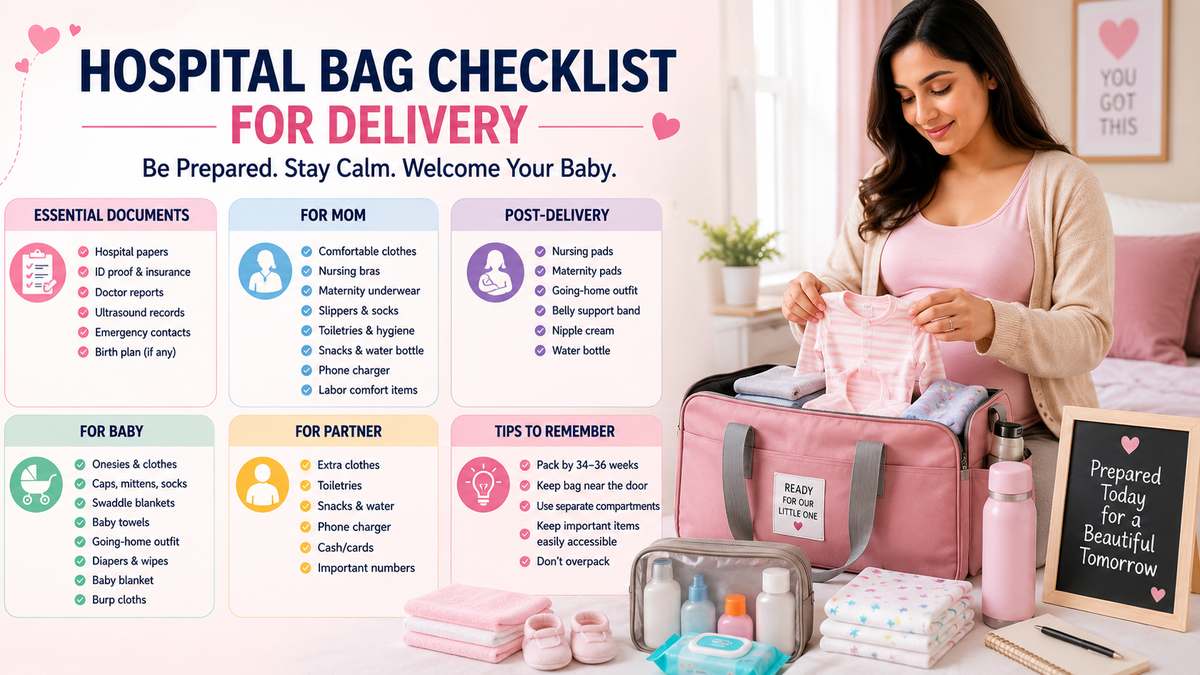
As the due date gets closer, excitement and nervousness often go hand in hand. Between preparing the nursery, attending doctor visits, and managing the final weeks of pregnancy, many women suddenly realize they still haven’t packed their hospital bag.
Preparing a hospital bag in advance can make a huge difference during labor and delivery. It helps reduce stress, avoids last-minute rushing, and ensures that both mother and baby have everything needed for a more comfortable hospital stay.
Whether it is your first pregnancy or not, having a well-planned hospital bag checklist for delivery can help you feel more prepared and confident when the big day arrives.
When Should You Pack Your Hospital Bag?
Most doctors recommend packing the hospital bag by around 34–36 weeks of pregnancy. While some women deliver on their due date, others may go into labor earlier than expected.
Packing ahead of time allows you to stay calm if labor starts suddenly.
Keeping the bag ready near the door or in the car can also save valuable time during contractions.
Why Is Packing Early Important?
Labor can begin unexpectedly, and during active contractions, even simple tasks may feel overwhelming.
A ready-to-go delivery bag for pregnancy helps
- Reduce anxiety
- Prevent forgetting important items
- Make hospital admission smoother
- Improve comfort during labor and recovery
- Help family members stay organized
Many mothers later say that having their bag prepared gave them a sense of control and peace of mind during labor.
Essential Documents to Carry
Before thinking about clothes and baby items, it’s important to organize all medical and identification documents.
Important documents include
- Hospital registration papers
- Doctor’s prescriptions and reports
- Pregnancy file and ultrasound records
- ID proof and insurance documents
- Emergency contact numbers
- Birth plan (if prepared)
Keeping these documents in a separate folder inside the bag makes them easy to access when needed.
Hospital Bag Checklist for Delivery: Essentials for Mom
Packing for the mother should focus on comfort, hygiene, and recovery.
Comfortable Clothing
Hospitals usually provide gowns during labor, but carrying a few comfortable clothes for afterward is helpful.
Recommended items include
- Loose nightgowns or feeding-friendly dresses
- Comfortable nursing bras
- Maternity underwear
- Loose slippers or flip-flops
- Warm socks
- Lightweight shawl or sweater
Choose soft, breathable fabrics that are easy to wear after delivery.
Toiletries and Personal Care Items
Basic hygiene products can help you feel fresh and comfortable during your hospital stay.
Important toiletries include
- Toothbrush and toothpaste
- Face wash and moisturizer
- Hairbrush and hair ties
- Lip balm
- Shampoo and soap
- Sanitary pads recommended for postpartum bleeding
- Hand sanitizer
- Tissues and wet wipes
Hospitals may provide some items, but carrying your own essentials often feels more comfortable.
Snacks and Hydration
Labor can be physically exhausting, and after delivery, many women feel extremely hungry.
Depending on hospital guidelines, consider packing:
- Healthy snacks
- Dry fruits
- Biscuits or crackers
- Water bottle
- Electrolyte drinks
These may also help your birth partner during long hospital hours.
Items for Labor Comfort
Some women find comfort in carrying a few personal items during labor.
Helpful additions may include
- Phone charger
- Headphones
- Relaxing music playlist
- Pillow from home
- Massage oil
- Small towel
- Breathing or relaxation aids
Even small familiar items can make the hospital environment feel less stressful.
Hospital Bag for Pregnant Women: Post-Delivery Essentials
After childbirth, the body needs rest and recovery support.
Useful postpartum items include
- Nursing pads
- Maternity pads
- Comfortable going-home outfit
- Belly support band if advised by doctor
- Nipple cream for breastfeeding discomfort
- Reusable water bottle
Many women underestimate how important comfort becomes after delivery, especially after a cesarean birth.
Newborn Hospital Bag Checklist
Packing for the baby is equally important. Newborns require several essentials immediately after birth.
Baby clothing essentials
- Soft cotton onesies
- Newborn caps
- Mittens and socks
- Swaddle cloths or blankets
- Baby towels
- Going-home outfit
Hospitals may provide some baby clothing temporarily, but parents usually prefer carrying their own items.
Baby Hygiene and Care Items
The newborn hospital bag checklist should also include basic baby care products.
Recommended items
- Newborn diapers
- Baby wipes
- Baby blanket
- Burp cloths
- Gentle baby lotion if needed
Avoid carrying too many products, as newborn skin is delicate and usually requires minimal care initially.
Essentials for the Birth Partner
Partners often forget to prepare for themselves while focusing entirely on the mother and baby.
If your partner plans to stay at the hospital, it may help to pack
- Extra clothes
- Phone charger
- Snacks
- Basic toiletries
- Cash or cards
- Important phone numbers
A prepared support person can provide much better emotional and practical support during labor.
What NOT to Pack
While preparing the hospital bag, many families tend to overpack.
Avoid carrying
- Excessive jewelry or valuables
- Too many baby clothes
- Heavy blankets
- Large amounts of cash
- Strong perfumes
- Tight or uncomfortable clothing
Keeping the bag simple and organized makes finding items easier during labor and recovery.
Tips for Packing Hospital Bag for Delivery
Packing smartly is often more important than packing heavily.
Here are some practical tips
Use Separate Compartments
Divide items into sections for
- Mother
- Baby
- Documents
- Toiletries
This saves time during emergencies.
- Keep Frequently Used Items Accessible
Items like documents, phone chargers, and maternity pads should be easy to reach. - Pack Two Smaller Bags if Needed
Some women prefer one labor bag and one postpartum bag to stay organized. - Wash Baby Clothes Before Packing
Newborn skin is extremely sensitive, so freshly washed cotton clothing is recommended. - Emotional Preparation Matters Too
While preparing the hospital bag is important, emotional readiness matters just as much.
The final weeks of pregnancy often bring mixed emotions:
- Excitement
- Anxiety
- Fear of labor
- Questions about parenting
- Sleep disturbances
Having practical things prepared ahead of time can reduce stress and allow mothers to focus more calmly on the birth experience.
Many women feel more confident simply knowing that everything is ready for the baby’s arrival.
Preparing for Different Types of Delivery
Whether you are planning a normal delivery or cesarean section, your hospital bag essentials remain mostly similar.
However, women undergoing cesarean delivery may especially benefit from
- Loose high-waist clothing
- Extra maternity pads
- Easy-to-wear slippers
- Comfortable pillows for support
Recovery needs may differ slightly, so discussing personalized preparation with your doctor can be helpful.
Final Thoughts
Preparing a thoughtful hospital bag checklist for delivery can make childbirth feel far less overwhelming. From essential documents and comfortable clothing to newborn care items and postpartum supplies, careful planning helps ensure a smoother and more comfortable hospital experience.
Packing your hospital bag for pregnant women early allows you to stay relaxed and better prepared for labor, whether it begins unexpectedly or as planned. Remember, every pregnancy journey is unique, and your hospital bag should reflect your personal comfort and medical needs.
If you are nearing your due date and need guidance about labor preparation, childbirth, or postpartum care, consulting an experienced gynecologist in Panaji can help you feel informed, supported, and confident as you prepare to welcome your baby.
