
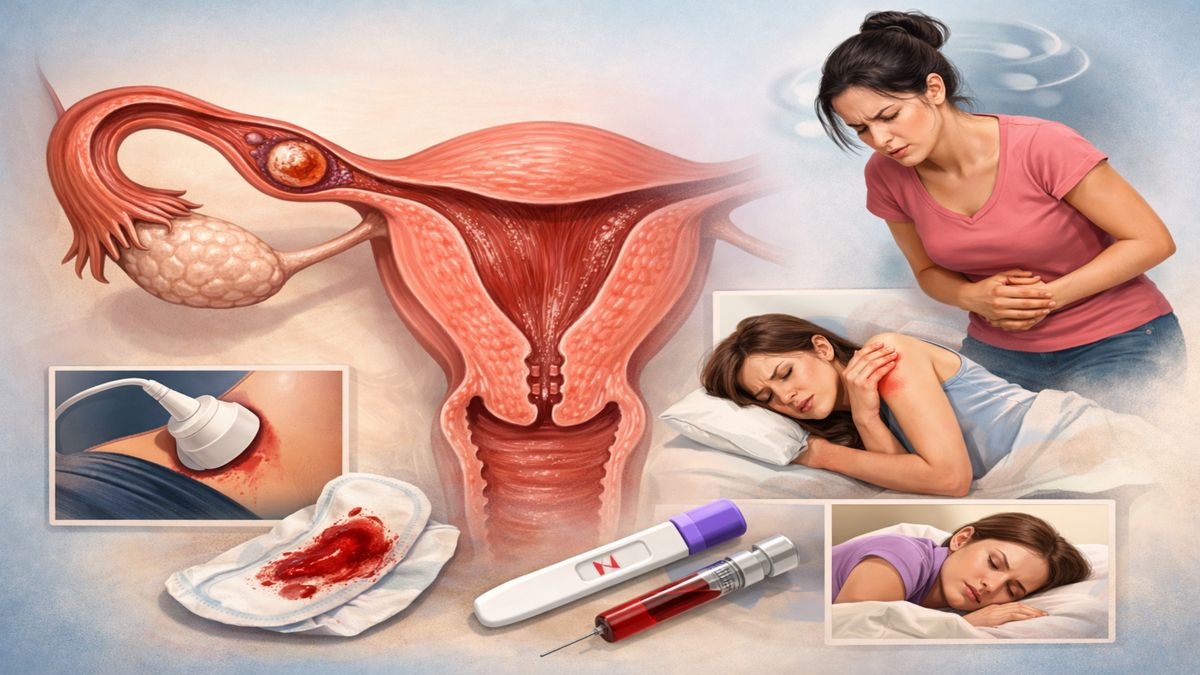
As a gynaecologist in Panaji, I often meet women who tell me, “Doctor, I thought something felt off, but I didn’t think it was serious.” Many of these conversations revolve around one condition that is commonly misunderstood and often missed in the early stages—ectopic pregnancy.
An ectopic pregnancy can be frightening, but knowledge truly is power. Understanding the signs of ectopic pregnancy, recognizing early symptoms, and knowing when to seek medical care can make a life-saving difference. This blog is written to help you do exactly that—clearly, calmly, and without unnecessary fear.
What Is an Ectopic Pregnancy?
In a healthy pregnancy, a fertilized egg implants itself inside the uterus. An ectopic pregnancy occurs when the pregnancy implants outside the uterus, most commonly in the fallopian tube. Less commonly, it may implant in the ovary, cervix, or abdominal cavity.
Because these areas are not designed to support a growing pregnancy, an ectopic pregnancy cannot continue normally and requires prompt medical attention.
Why Early Awareness Matters
The early signs of ectopic pregnancy can closely resemble those of a normal pregnancy—missed periods, nausea, or breast tenderness. This is why many women don’t realise something is wrong until symptoms worsen.
Recognising the pregnancy out of uterus symptoms early helps prevent serious complications such as internal bleeding or damage to reproductive organs.
Early Signs of Ectopic Pregnancy You Should Never Ignore
1. Abnormal Vaginal Bleeding
One of the most common ectopic pregnancy bleeding symptoms is unusual vaginal bleeding. This may look different from your normal period—it could be lighter, darker, or occur off-schedule.
Some women assume this bleeding is implantation bleeding or an irregular period, which delays diagnosis.
2. Lower Abdominal or Pelvic Pain
Pain associated with ectopic pregnancy is often
- Sharp or stabbing
- Felt on one side of the abdomen
- Persistent or worsening over time
This pain may come and go initially, which makes it easier to dismiss. However, any one-sided pelvic pain during early pregnancy should always be evaluated.
3. Symptoms of Ectopic Pregnancy at 5 Weeks
Many women ask me specifically about symptoms of ectopic pregnancy at 5 weeks, as this is often when discomfort begins.
At around 5 weeks, symptoms may include
- Mild but persistent lower abdominal pain
- Spotting or light bleeding
- Shoulder tip pain (a warning sign of internal bleeding)
- Dizziness or faintness
At this stage, symptoms can still feel “manageable,” which is why medical advice is often delayed.
4. Shoulder Pain and Dizziness
Shoulder tip pain is a red-flag symptom. It happens when internal bleeding irritates the diaphragm, sending pain signals to the shoulder.
If shoulder pain is accompanied by dizziness, weakness, or fainting, this could indicate a medical emergency and requires immediate care.
5. Pregnancy Symptoms That Suddenly Disappear
Some women notice that typical pregnancy symptoms—like nausea or breast tenderness—suddenly stop. While this doesn’t always mean an ectopic pregnancy, it can be a warning sign when combined with pain or bleeding.
Ectopic Pregnancy White Discharge: Is It a Symptom?
Many patients ask about ectopic pregnancy white discharge. While white discharge alone is not a definitive sign, changes in discharge—especially if accompanied by pain, spotting, or foul smell—should not be ignored.
Discharge changes can be confusing because hormonal shifts in early pregnancy can also cause them. The key is combination of symptoms, not one sign alone.
Pregnancy Out of Uterus Symptoms: Less Obvious Signs
Not all symptoms are dramatic. Some subtle pregnancy out of uterus symptoms include
- Pressure in the rectum
- Pain during bowel movements
- Discomfort during urination
- Feeling generally “unwell” without a clear reason
Women know their bodies well. If something feels wrong, it usually is worth checking.
Ectopic Pregnancy: How to Diagnose It Early
Many women ask, “Doctor, how is ectopic pregnancy diagnosed?” Ectopic pregnancy how to diagnose involves a combination of
- Blood tests (hCG levels): These may rise slower than expected
- Transvaginal ultrasound: To check whether the pregnancy is inside the uterus
- Clinical examination: Based on pain, bleeding, and physical findings
Early diagnosis often allows for simpler treatment options and better fertility outcomes.
Who Is at Higher Risk?
While ectopic pregnancy can happen to anyone, certain factors increase risk
- Previous ectopic pregnancy
- History of pelvic infections
- Endometriosis
- Fertility treatments
- Smoking
- Previous tubal surgery
Even without risk factors, ectopic pregnancy can still occur—so symptoms always matter more than history alone.
When Should You See a Doctor?
Please seek immediate medical attention if you experience
- Severe abdominal pain
- Heavy vaginal bleeding
- Dizziness or fainting
- Shoulder pain
- Positive pregnancy test with pain or spotting
Early intervention can be life-saving and fertility-preserving.
A Gentle Word From Your Gynaecologist
Ectopic pregnancy is not something you cause. It is not related to stress, diet, or daily activity. What does matter is listening to your body and seeking help early.
If you suspect something is not right—even if symptoms seem mild—trust your instincts and consult your doctor. No concern is ever “too small” when it comes to your health.
Final Thoughts
Understanding the signs of ectopic pregnancy empowers women to act early, reduce complications, and protect their future reproductive health. Awareness saves lives—and sharing this information could help someone else too.
If you are pregnant or planning a pregnancy and have concerns, don’t hesitate to reach out to your gynaecologist. We are here to support you at every step.
