
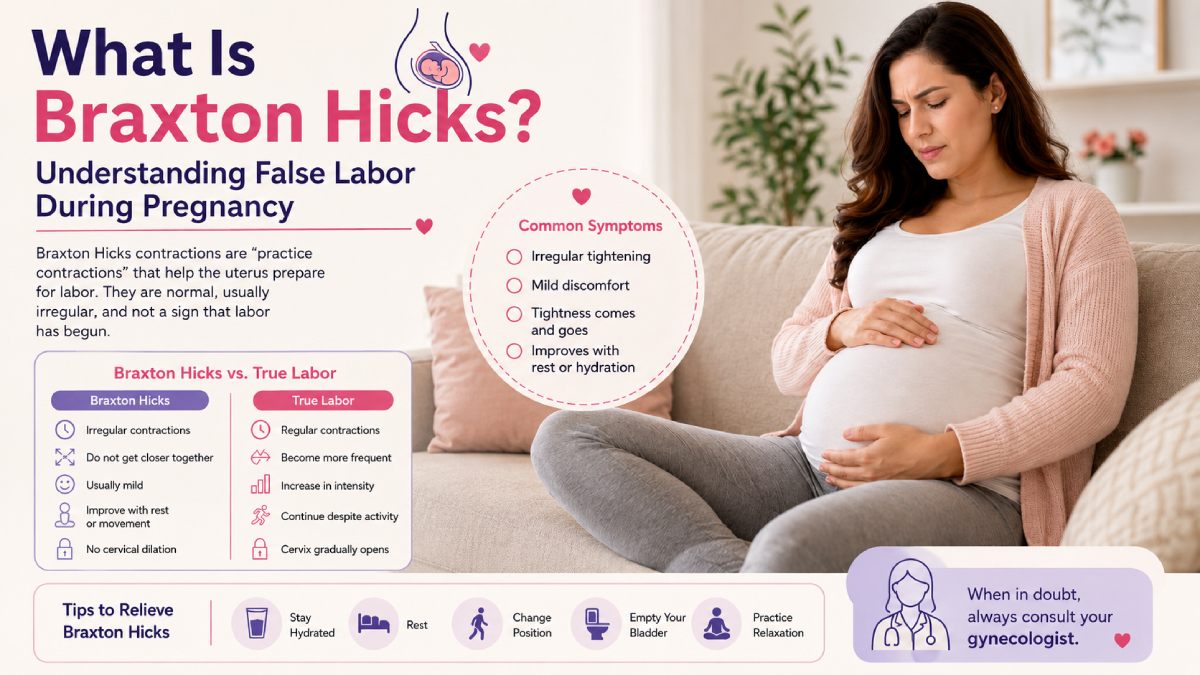
Pregnancy is filled with new experiences, and for many women, one of the most confusing moments is feeling contractions before labor actually begins. Many expectant mothers become anxious when they notice tightening in the abdomen weeks before their due date. This often leads to an important question: what is Braxton Hicks?
Braxton Hicks contractions are commonly known as “false labor” contractions. They are a normal part of pregnancy and usually do not indicate that true labor has started. However, because they can feel uncomfortable and sometimes resemble labor contractions, they often create worry, especially for first-time mothers.
Understanding the difference between Braxton Hicks and real labor can help pregnant women feel more confident and prepared during the final months of pregnancy.
What Is Braxton Hicks?
Braxton Hicks contractions are irregular tightening sensations of the uterus that occur during pregnancy. They are named after Dr. John Braxton Hicks, the doctor who first described them in the late 1800s.
The uterus is a muscle, and throughout pregnancy, it occasionally tightens and relaxes as a way of preparing for labor. These contractions are generally harmless and are considered a normal part of pregnancy.
The braxton hicks contraction meaning is essentially “practice contractions.” They help the uterus prepare for childbirth, although they do not cause the cervix to open like true labor contractions do.
Braxton Hicks Contractions Start at What Week?
One of the most common questions pregnant women ask is: Braxton Hicks contractions start at what week?
Braxton Hicks contractions can actually begin as early as the second trimester, sometimes around 16–20 weeks of pregnancy. However, many women do not notice them until the third trimester.
As pregnancy progresses, these contractions may become more noticeable because the uterus grows stronger and larger.
Some women experience them occasionally, while others may notice them more frequently, especially toward the final weeks of pregnancy.
What Does a Braxton Hick Contraction Feel Like?
The sensation varies from woman to woman. Some women barely notice them, while others describe them as uncomfortable tightening or pressure in the abdomen.
Common descriptions include
- Tightening across the belly
- A hard or firm feeling in the uterus
- Mild discomfort rather than severe pain
- Tightness that comes and goes irregularly
- Pressure in the lower abdomen
Many women say the abdomen suddenly feels very hard for a short period before relaxing again.
Unlike true labor contractions, Braxton Hicks contractions are usually irregular and unpredictable.
Braxton Hicks Contraction Symptoms
Recognizing braxton hicks contraction symptoms can help reduce unnecessary panic during pregnancy.
Common symptoms include
- Irregular contractions
- Tightening in the abdomen
- Mild discomfort
- Contractions that do not increase in intensity
- Tightness that improves with rest or hydration
- No progressive cervical dilation
Braxton Hicks contractions are often more uncomfortable than painful. In many cases, changing position or drinking water helps them settle down.
What Is False Labour Pain?
False labor refers to contractions that mimic labor but do not actually lead to childbirth.
This is why Braxton Hicks contractions are often called false labor pains.
The purpose of false labor is not fully understood, but doctors believe it helps prepare the uterus for actual labor while improving blood flow to the placenta.
False labor can sometimes become more frequent toward the end of pregnancy, making it difficult to know whether real labor has started.
Difference Between Braxton Hicks and Real Labor
One of the biggest concerns during late pregnancy is identifying whether contractions are real or false.
Here are some important differences
| Braxton Hicks | True Labor |
|---|---|
| Irregular contractions | Regular contractions |
| Do not get closer together | Become more frequent |
| Usually mild | Increase in intensity |
| Improve with movement or rest | Continue despite activity |
| No cervical dilation | Cervix gradually opens |
| Felt mainly in the front abdomen | Often starts in the back and moves forward |
If contractions become regular, painful, and closer together over time, medical evaluation is important.
What Triggers Braxton Hicks Contractions?
Several factors may trigger these contractions during pregnancy.
Common triggers include
- Dehydration
- Physical activity
- Overexertion
- Full bladder
- Sexual activity
- Stress or fatigue
- Baby movement
In many cases, simple lifestyle adjustments can help reduce their frequency.
How to Relieve Braxton Hicks Contractions
Although Braxton Hicks contractions are normal, they can still feel uncomfortable. Fortunately, there are several simple ways to ease them.
-
Change Your Position
If you have been standing for a long time, try sitting or lying down. If you have been inactive, gentle movement may help.
-
Stay Hydrated
Dehydration is a very common trigger for Braxton Hicks contractions. Drinking enough water often helps reduce tightening.
-
Rest
Fatigue can increase uterine irritability. Taking time to rest may help calm the contractions.
-
Empty Your Bladder
A full bladder may stimulate contractions in some women.
-
Practice Relaxation Techniques
Deep breathing, stretching, and relaxation exercises can help reduce discomfort and anxiety.
When Should You Contact a Doctor?
Although Braxton Hicks contractions are generally harmless, there are situations where medical attention is necessary.
Contact your doctor if you experience
- Regular contractions before 37 weeks
- Severe abdominal pain
- Vaginal bleeding
- Fluid leakage
- Reduced baby movements
- Fever
- Contractions increasing in intensity
- Pelvic pressure or back pain
These symptoms may sometimes indicate preterm labor or other pregnancy complications.
Are Braxton Hicks More Common in First Pregnancies?
Braxton Hicks contractions can occur in any pregnancy, but women may notice them differently depending on whether it is their first pregnancy or not.
Interestingly, many women notice them more clearly during second or third pregnancies because they are already familiar with the sensation of uterine tightening.
Can Braxton Hicks Affect the Baby?
In most cases, no.
Braxton Hicks contractions are considered a normal part of pregnancy and generally do not harm the baby. They are simply temporary tightening of the uterine muscles.
However, staying hydrated and avoiding excessive physical stress is still important for overall pregnancy health.
Emotional Anxiety Around False Labor
Feeling contractions before the due date can understandably cause fear or confusion, especially for first-time mothers.
Many women worry they may not recognize true labor when it begins. Others become anxious every time tightening occurs.
Learning about what is false labour pain and understanding how Braxton Hicks contractions behave can help reduce stress and improve confidence during pregnancy.
Attending prenatal checkups regularly also provides reassurance and allows women to discuss any concerns with their doctor.
Preparing for Real Labor
As pregnancy progresses, it becomes increasingly important to recognize the signs of true labor.
Women should monitor
- Frequency of contractions
- Duration of contractions
- Intensity over time
- Associated symptoms such as water breaking or bleeding
Keeping track of contraction timing can help determine whether labor is truly beginning.
Final Thoughts
Understanding what is Braxton Hicks can help pregnant women feel more prepared and less anxious during the later stages of pregnancy. These practice contractions are a normal part of the body’s preparation for childbirth and are usually harmless.
Although Braxton Hicks contractions may feel uncomfortable, they are generally irregular, mild, and temporary. Knowing the difference between false labor and true labor can prevent unnecessary stress while helping women seek timely care when needed.
If you experience concerning symptoms, severe pain, or frequent contractions, consulting a trusted pregnancy specialist is always the safest approach. For personalized pregnancy care and expert guidance throughout every stage of motherhood, connecting with an experienced female gynecologist in goa can provide reassurance, support, and comprehensive care during your pregnancy journey.
