
For many women trying to conceive, the days between ovulation and an expected period can feel long and emotionally overwhelming. Every small change in the body may lead to questions: Is this my period starting, or could I be pregnant?
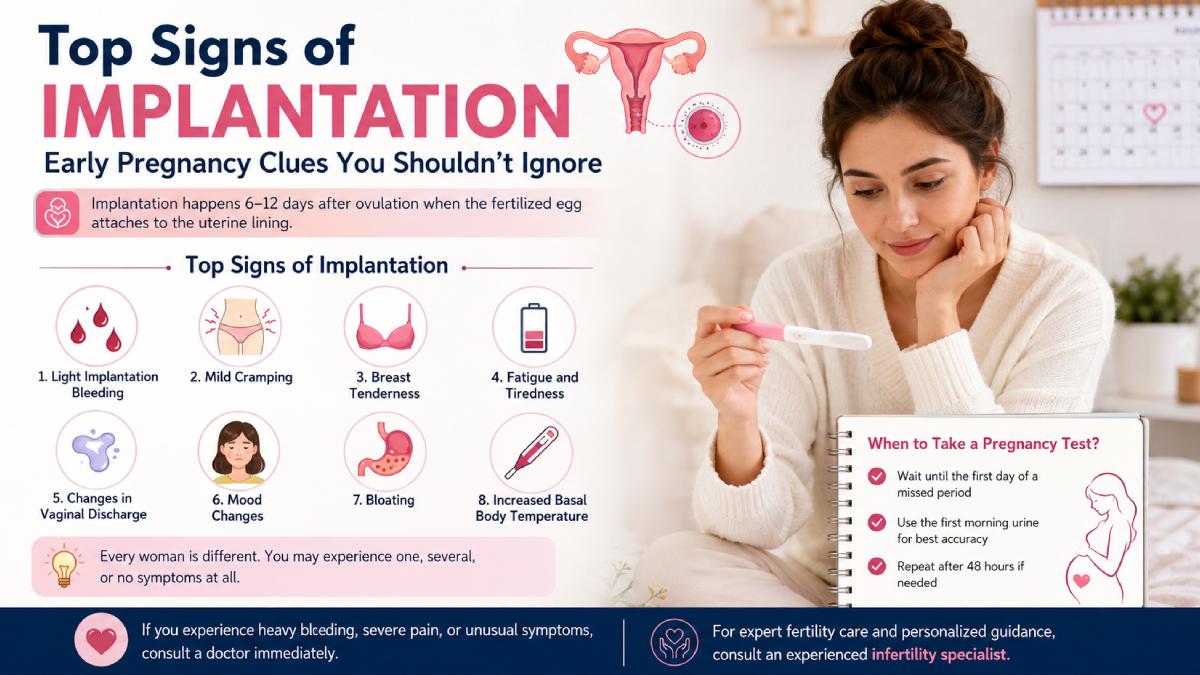
One of the earliest signs that pregnancy may have begun is implantation. This happens when a fertilized egg attaches itself to the lining of the uterus, usually around 6–12 days after ovulation. During this process, some women notice subtle physical changes known as the signs of implantation.
These symptoms are often mild and easy to miss, but understanding them can help women recognize early pregnancy clues before a missed period or positive pregnancy test.
What Is Implantation?
Implantation is a natural and essential stage of early pregnancy. After fertilization occurs in the fallopian tube, the fertilized egg travels toward the uterus. Once it reaches the uterine lining, it attaches itself and begins to grow.
This attachment process may trigger mild hormonal and physical changes in the body. While not every woman experiences noticeable symptoms, some may observe early signs and symptoms of implantation before confirming pregnancy.
Common Signs of Implantation
Every woman’s experience is different. Some notice several symptoms, while others experience none at all. Here are some of the most common signs of implantation.
1. Light Implantation Bleeding
One of the earliest and most talked-about symptoms is light spotting or bleeding.
Implantation bleeding usually occurs when the fertilized egg attaches to the uterine lining, causing tiny blood vessels to break. This can lead to very light pink, brown, or light red spotting.
Many women confuse this with the beginning of their menstrual cycle, which is why understanding the difference between menstruation and implantation bleeding is important.
Difference Between Menstruation and Implantation Bleeding
Implantation bleeding is usually
- Much lighter than a regular period
- Shorter in duration
- Pinkish or brown in color
- Not associated with heavy clotting
- Mild or painless in most cases
Menstrual bleeding, on the other hand, is generally heavier, brighter red, and lasts longer.
The timing also differs slightly. Implantation bleeding often happens a few days before the expected period.
2. Mild Cramping
Some women experience mild lower abdominal cramps during implantation. These cramps are usually gentle and short-lasting compared to menstrual cramps.
The sensation may feel like
- Mild pulling
- Tingling
- Light pressure
- Occasional discomfort in the lower abdomen
Severe pain is not considered typical implantation pain and should always be evaluated by a doctor.
3. Breast Tenderness
Hormonal changes begin very early in pregnancy. Rising progesterone and hCG levels may make the breasts feel
- Tender
- Swollen
- Sensitive to touch
- Heavy or fuller than usual
This symptom can resemble premenstrual changes, which is why many women initially mistake early pregnancy for an approaching period.
4. Fatigue and Tiredness
Feeling unusually tired is another common pregnancy implantation symptom.
Even in the earliest stages, the body begins working hard to support pregnancy. Increased progesterone levels can lead to fatigue, low energy, and increased sleepiness.
Some women notice they feel exhausted despite getting adequate rest.
5. Changes in Vaginal Discharge
Implantation bleeding discharge can sometimes appear alongside increased vaginal discharge due to hormonal changes.
Women may notice
- Thin white discharge
- Creamy cervical mucus
- Slightly increased moisture
As long as the discharge does not have a foul smell, itching, or irritation, it is usually normal.
6. Mood Changes
Hormonal fluctuations can affect emotions very early in pregnancy. Some women feel more emotional, sensitive, anxious, or irritable during implantation.
Mood changes alone are not a reliable sign, but when combined with other symptoms, they may suggest early pregnancy.
7. Bloating
Hormonal shifts can slow digestion and increase water retention, leading to mild bloating during implantation.
Many women describe this sensation as feeling “full” or “puffy” even before missing a period.
8. Increased Basal Body Temperature
Women who track ovulation and fertility signs may notice that their basal body temperature remains elevated after ovulation instead of dropping before menstruation.
A sustained rise in temperature for more than two weeks can sometimes indicate early pregnancy.
Does Every Woman Experience Implantation Symptoms?
No. Many women do not notice any obvious signs of implantation at all.
In fact, some pregnancies progress completely normally without implantation bleeding or noticeable symptoms. Others may experience only one or two subtle signs.
Absence of symptoms does not mean implantation has failed.
How Long Does Implantation Bleeding Last?
Implantation bleeding is usually brief.
For most women, it lasts
- A few hours
- One to two days
- Occasionally up to three days
Heavy bleeding similar to a menstrual period is not typical implantation bleeding and may need medical evaluation.
Can Implantation Symptoms Be Confused With PMS?
Yes, very easily.
Many signs and symptoms of implantation overlap with premenstrual syndrome (PMS), including
- Breast soreness
- Mood swings
- Bloating
- Fatigue
- Mild cramping
This overlap often makes it difficult to determine whether pregnancy has occurred until a pregnancy test is taken.
The key difference is usually the timing, intensity, and presence of light spotting.
When Should You Take a Pregnancy Test?
Although implantation symptoms may occur early, pregnancy tests are usually more accurate after a missed period.
Testing too early may give a false negative result because hCG levels may not yet be high enough to detect.
For the best accuracy
- Wait until at least the first day of a missed period
- Use the first urine sample of the morning
- Repeat the test after 48 hours if the result is negative but symptoms continue
When Should Implantation Bleeding Be Evaluated by a Doctor?
While light bleeding when pregnant can sometimes be normal during implantation, certain symptoms should never be ignored.
Seek medical attention if you experience
- Heavy bleeding
- Severe abdominal pain
- Dizziness
- Fever
- Large blood clots
- One-sided pelvic pain
These symptoms may indicate conditions such as miscarriage, hormonal imbalance, or ectopic pregnancy.
Emotional Stress During the Waiting Period
The time between ovulation and a pregnancy test can be emotionally challenging, especially for women trying to conceive for months or years.
It is natural to become highly aware of every symptom during this period. However, it’s important to remember that symptoms alone cannot confirm pregnancy.
Stress and anxiety can also mimic or intensify physical symptoms, making the waiting period even more confusing.
Practicing patience and focusing on overall health can help reduce emotional strain during this phase.
Final Thoughts
Recognizing the top signs of implantation can help women better understand the earliest stages of pregnancy. From implantation bleeding discharge and mild cramping to fatigue and breast tenderness, these symptoms may offer subtle clues that conception has occurred.
However, every pregnancy is unique. Some women experience multiple pregnancy implantation symptoms, while others may not notice any changes at all.
Understanding the difference between menstruation and implantation bleeding can help reduce confusion and unnecessary anxiety during the early days of pregnancy. If you experience unusual symptoms, irregular bleeding, or difficulty conceiving, consulting a qualified fertility expert can provide clarity and guidance.
For couples seeking expert reproductive care and personalized fertility support, consulting an experienced infertility specialist in Goa can help address concerns and guide the journey toward parenthood with confidence.
