
A heavy menstrual flow can be more than just an uncomfortable inconvenience. For many women, excessive bleeding during periods can affect daily life, energy levels, confidence, and overall health. While some women naturally experience heavier periods than others, persistent or unusually heavy bleeding may indicate an underlying medical condition.
Heavy menstrual bleeding, also known as menorrhagia, affects millions of women worldwide. Understanding the reasons for heavy menstrual bleeding can help you seek timely treatment and prevent complications such as anemia, fatigue, and hormonal imbalances.
If your periods are becoming heavier, longer, or more painful, it is important to identify the underlying causes of heavy menstrual flow and consult a qualified gynecologist.
What Is Considered a Heavy Menstrual Flow?
A period is generally considered heavy when
- You need to change your pad or tampon every 1–2 hours.
- Bleeding lasts longer than 7 days.
- You pass large blood clots.
- You experience frequent leaks despite adequate protection.
- Your periods interfere with work, sleep, or daily activities.
- You feel weak, breathless, or fatigued during menstruation.
Heavy bleeding should not be ignored, especially when it begins suddenly or worsens over time.
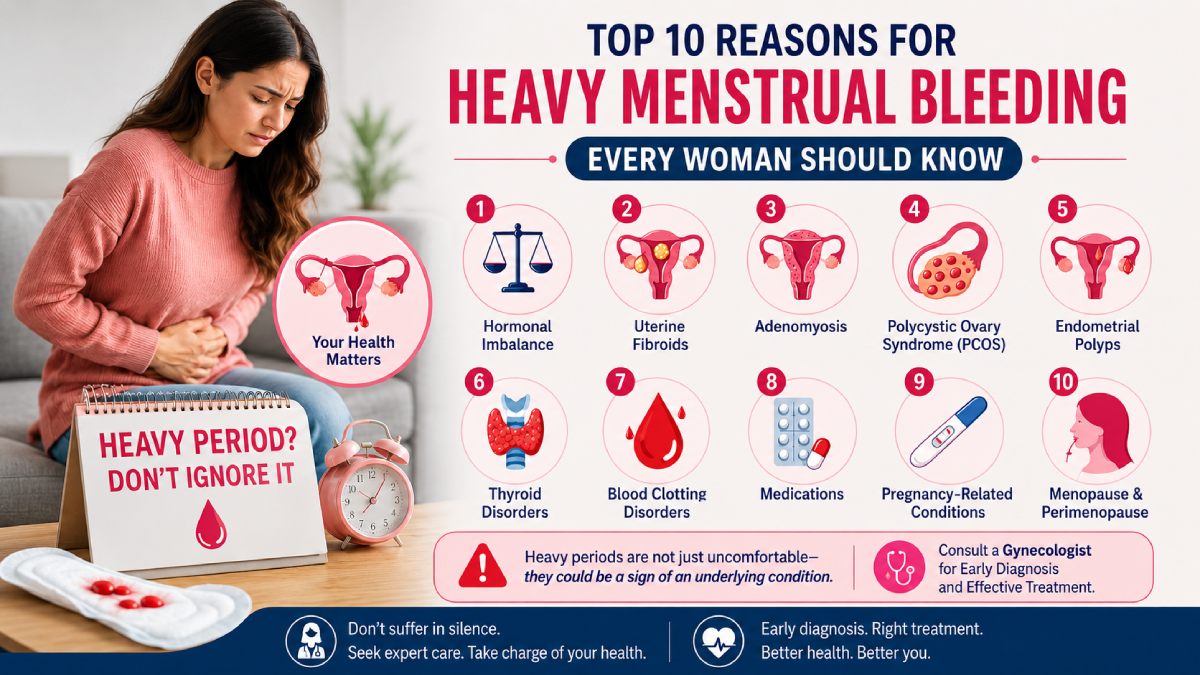
Top 10 Reasons for Heavy Menstrual Bleeding
1. Hormonal Imbalance
One of the most common reasons for heavy menstrual bleeding is a hormonal imbalance between estrogen and progesterone.
When these hormones are not balanced, the uterine lining can become excessively thick. As a result, more tissue is shed during menstruation, leading to a heavier menstrual flow.
Hormonal fluctuations are especially common during adolescence, perimenopause, and in women with PCOS.
2. Uterine Fibroids
Fibroids are non-cancerous growths that develop in the uterus. They are among the leading causes of heavy menstrual flow in women aged 30 to 50.
Symptoms may include
- Heavy or prolonged periods
- Pelvic pressure
- Frequent urination
- Lower abdominal discomfort
The severity of symptoms often depends on the size and location of the fibroids.
3. Adenomyosis
Adenomyosis occurs when the uterine lining grows into the muscular wall of the uterus.
This condition often causes
- Heavy menstrual bleeding
- Severe menstrual cramps
- Pelvic pain
- Enlarged uterus
Many women mistake these symptoms for “normal” period pain, delaying diagnosis and treatment.
4. Polycystic Ovary Syndrome (PCOS)
PCOS affects hormone production and ovulation.
Irregular ovulation causes the uterine lining to build up over time. When shedding finally occurs, the bleeding can be significantly heavier than normal.
PCOS is one of the most overlooked causes of heavy menstrual flow among younger women.
5. Endometrial Polyps
Endometrial polyps are small growths within the uterine lining.
Although usually benign, they can contribute to:
- Heavy periods
- Spotting between periods
- Irregular menstrual cycles
Polyps are often diagnosed through ultrasound or hysteroscopy.
6. Thyroid Disorders
Your thyroid gland plays an important role in regulating hormones.
Hypothyroidism, in particular, can lead to
- Heavy menstrual flow
- Irregular periods
- Fatigue
- Weight gain
Women experiencing both menstrual changes and unexplained tiredness should consider thyroid evaluation.
7. Blood Clotting Disorders
Certain inherited bleeding disorders can cause excessive menstrual bleeding from adolescence onward.
Women with clotting disorders may also experience
- Easy bruising
- Frequent nosebleeds
- Excessive bleeding after surgery or dental procedures
Identifying these conditions early can significantly improve quality of life.
8. Medications
Certain medications may increase menstrual blood loss.
Common examples include
- Blood thinners
- Hormonal medications
- Some anti-inflammatory drugs
Always discuss any menstrual changes with your doctor after starting a new medication.
9. Pregnancy-Related Conditions
Unexpected heavy bleeding during pregnancy requires immediate medical attention.
Potential causes include
- Miscarriage
- Ectopic pregnancy
- Placental complications
Prompt diagnosis is essential to protect both maternal health and future fertility.
10. Menopause and Perimenopause
Many women experience menopause heavy bleeding during the years leading up to menopause.
Hormonal fluctuations during perimenopause can cause
- Irregular periods
- Very heavy bleeding
- Longer menstrual cycles
- Unexpected spotting
Although menopause heavy bleeding is often related to hormonal changes, persistent or postmenopausal bleeding should always be evaluated to rule out more serious conditions.
When Should You Seek Medical Help?
You should consult a gynecologist if
- Your periods suddenly become heavier.
- Bleeding lasts longer than a week.
- You experience severe pain.
- You feel dizzy or extremely tired.
- You develop symptoms of anemia.
- You experience bleeding after menopause.
Early diagnosis often makes treatment simpler and more effective.
How Is Heavy Menstrual Bleeding Treated?
Treatment depends on the underlying cause.
Options may include
- Hormonal therapy
- Oral contraceptive pills
- Hormonal IUDs
- Medications to reduce bleeding
- Fibroid treatment
- Minimally invasive procedures
- Surgical intervention in severe cases
A personalized treatment plan can significantly improve symptoms and quality of life.
